Introduction
The rapid proliferation of artificially generated content has fundamentally altered the digital landscape. Recent research demonstrates that large language models can pass the Turing test[1], that LLM-generated content is now widespread across society[2], and that foundational barriers such as CAPTCHAs can be reliably solved by artificial intelligence[3]. In response, many platforms have turned to government-issued identity verification as a definitive solution. Although government-issued identity verification addresses the genuine challenge of distinguishing humans from automated systems, its widespread implementation commoditises personal identity data and exposes users to inconsistent privacy protections. Privacy-preserving alternatives, particularly open-source methodologies that allow individuals to identify themselves, should therefore be adopted as the primary verification mechanism. This essay first examines the rationale behind identity verification, then analyses the privacy risks inherent in current government-issued approaches, and argues that decentralised alternatives offer a superior balance between platform security and individual privacy.
Intro
Motivation
I wanted to use a Text to speech to read these blog posts aloud, the only condition being that, it would have low-latency and locally compute all tokens. The reasoning behind this? because of the fact that I do not own a server! They are extremely expensive.
A very wise person once said, when resources for modern solutions become infeasibly expensive to you, rely on old solutions. Who said that? I did, but that part does not matter.
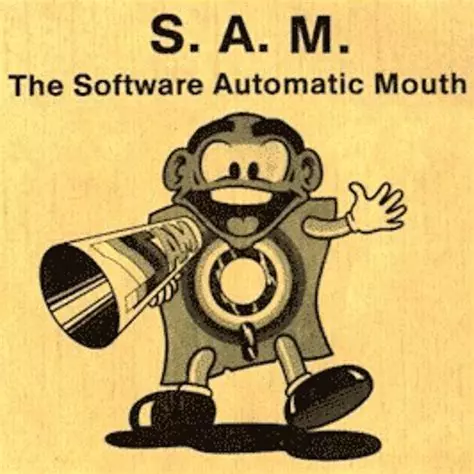
Thus, SAM came to mind: the Software Automatic Mouth[1] is a speech synthesiser originally written in 1982 by Mark Barton of Don’t Ask Software for the Commodore 64. Christian Schiffler (@discordier) ported SAM to JavaScript as SamJs[2], preserving the original’s distinctive robotic phoneme engine in a looooong ca. 3000-line browser-compatible library. SAM does not stream audio from a server! It runs entirely in the browser, synthesising speech from raw text via the Web Audio API[3]. Therefore there exist no latency beyond local computation. Helpful considering the new state of my internet after moving in! (It is awful)
The product is hexo-sam-reader, which is a Hexo plugin that adds a SAM-powered TTS reader widget to any blog post, made for Hexo. This document traces the full development from a hardcoded prototype to a published npm package. In the future I plan to have a smoother sounding voice, but I would like to talk about SAM first!
Intro
Motivation
As a university student with examinations around the corner, one grows tired of the same Flashcards and Quizlet decks.For this reason, I wanted something that I could use freely as a Terminal User Interface that paired well with the rest of my dotfiles and respective setup. At a later point, this turned to some rivalry based on points scored on Who knows the most Haskell? (I do!)
After finding and contributing to FTXUI[2] on Github, I decided to develop Certamen (latin: contest)[1].
SOLVE_NIVP
I had the pleasure of peer-reviewing the research software package solve_nivp, published in the Journal of Open Source Software (JOSS), DOI: 10.21105/joss.09775, authored by David Riley and Ioannis Stefanou.

I was invited as co-reviewer alongside Ductho Le and WhenXuan by Editor Daniel S. Katz. This post is not a review log, it is an explanation of what solve_nivp actually does, since the problem it solves is genuinely interesting and under-discussed.
Intro
ICPC
The International Collegiate Programming Contest is an incredibly renowned competitive programming competition with various stages, in this document I walk through my experience this 2026 ICPC in my three regional contests.
Team Found
Valyn, Anton and I formed the sudden team “(() => {})();” – which indeed is meant to represent the no-ops lambda function in javascript or “arrow-function” – thought of by our one and only Valyn on the first day (the initial orchestrator.)